
Over 5 decades, The Smiley Company has significantly influenced the creative industries, fiercely protecting its intellectual property due to the unique creative vision and business acumen of its founder and important investments in time and talent from numerous collaborators.
Since founding the Company in 1972, Franklin and Nicolas Loufrani have built a new and unique business model based on creative partnerships with third party manufacturers and retailers, creating a brand operating in almost 150 countries.

The Smiley Company, is the holder of a large trademark portfolio worldwide, including the Smiley Original Logo and the SMILEY name.
The first trademark for the Smiley Original Logo was registered in France in 1971, and thereafter in most countries in the world.
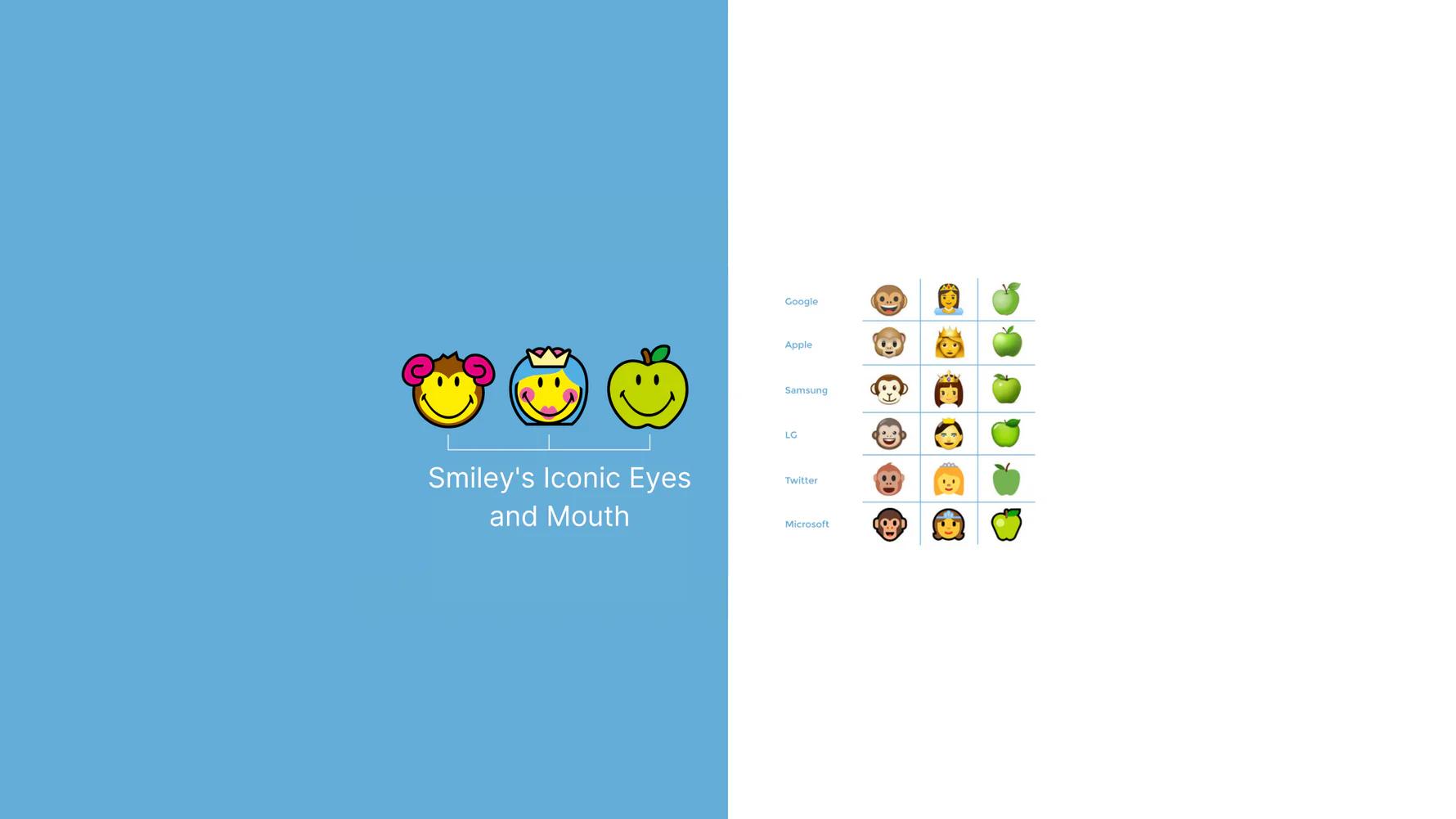
From 1997, the company has been creating variations of the Smiley logo for its products and for use as gif icons and stickers in the digital world. It was the first to make the claim that graphics as a replacement of ASCII emoticons made of punctuation would become a universal language and the first to sort these graphics into categories such as emotions, sport, characters, food and fruits, celebrations, weather and more.
By 2004 there were more than 3000 of these icons. Through time their art direction has been evolving in style.
Here are some examples:

Its subsidiary, SmileyWorld Ltd, owns copyright registrations for tens of thousands of graphics, including various iterations of the Smiley Original Logo. Collaborating with its partners, the company creates and develops nearly 15,000 new products and hundreds of marketing campaigns each year. SmileyWorld Ltd utilizes registered trademarks, copyrighted logos, and creative graphics designed by the Smiley Studio under the direction of its creative director, Nicolas Loufrani.
The rights in these trademarks and copyrights have been cultivated through significant creative efforts, marketing investments, an innovative business model, and the development of creative products for our licensees over more than five decades.
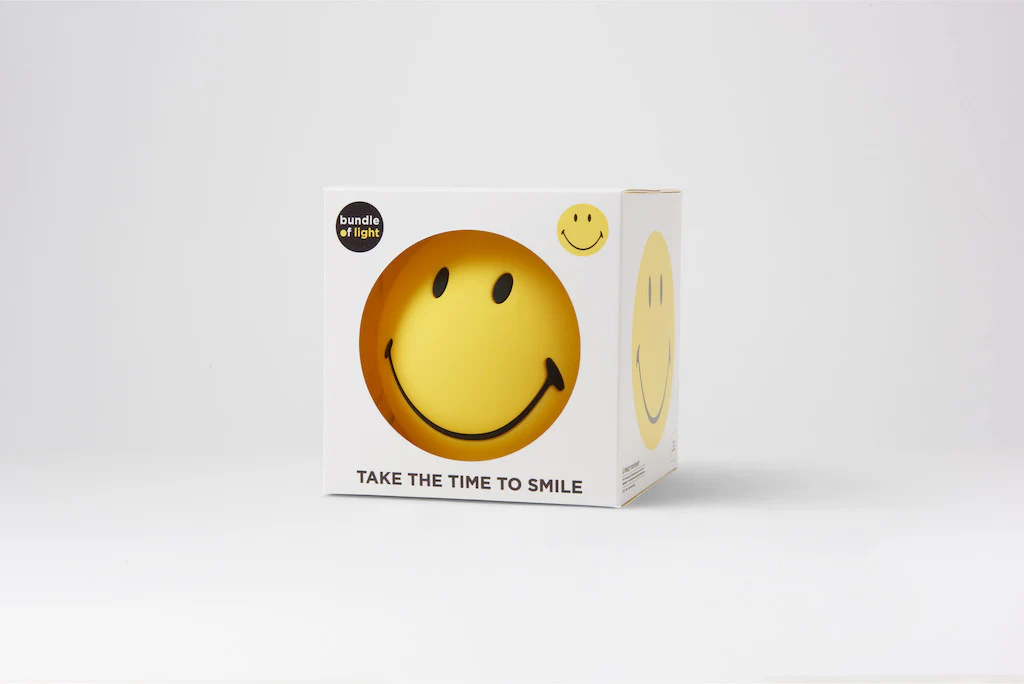
Our copyrights and trademarks pertain to the designs we have crafted, visible on our products, in our marketing materials, and within our figurative and nominal marks like Smiley or our taglines, such as “Take the time to smile” or “Future Positive”.
Counterfeit goods are a major concern for The Smiley Company. The Company invests in financial and human resources to fight against producers and sellers of counterfeit products, free riding on our efforts to create a unique brand and creating confusion in the marketplace.
We have a dedicated team of Intellectual Property and brand protection specialists that carry out many actions, which include both preventative and coercive measures.
We partner with local authorities including customs offices, investigators, law enforcement agencies, and law firms globally to shut down counterfeiting operations and remove the infringed products from the market.
These actions are implemented worldwide with special attention given to the Internet, which represents an important vehicle for the sale of counterfeit products.
The Smiley Company constantly monitors websites, marketplaces and social media platforms to detect counterfeit goods and avoid giving more visibility to counterfeits. Every year, The Smiley Company is successful in taking down a large number of listings/ advertisements on sales platforms and pages on social sites that breach its Intellectual Property rights.
Additionally, The Smiley Company is a member of key organizations dedicated to brand protection, including the INTA (International Trademark Association).
We provide to our licensees sustainable security stickers, labels and hangtags which allow the consumers to authenticate Smiley’s products, to ensure that they feel secure about the purchase they are making.
Click here to read our position on who invented the emojis.
There is no relation between the Smiley brand and Harvey Ball.
Click here to read our position about this urban myth.
The Smiley Company is protective of their intellectual property, including their copyrighted icons, logos, and designs. The following is what we consider infringements:
If you are selling items on Etsy and/or other e-commerce platforms which comprise SMILEY®, SMILEYWORLD®, and the Smiley Original Logo and its variations without permission, you are likely to be infringing on our intellectual property rights.
Even if you draw the designs yourself, if they look confusingly similar to one of our icons and other creations, it could still be considered as an infringement of our intellectual property.
Feel free to reach out to The Smiley Company to inquire about using our icons for your specific needs. Kindly provide details on your intended use, the duration, and the territories involved. If we agree to grant a license, a licensing fee may apply.
Usage rights for film, TV, and media, as well as art clearances are managed by our legal department through a simple permissions process. To request clearance for your project, please contact legal@smiley.com.
We do not encourage the reporting of infringements by third parties. We do not think reporting people is a nice human behaviour. It is usually triggered by hatred and jealousy. Our partners and ourselves are doing their best to identify infringing products and it is our own business to do so.
We monitor and enforce copyright and trademark infringements via several online brand protection service provider. We also send cease-and-desist letters (to first time infringers) and (in case of repeat infringement) we may initiate legal proceedings.
Our icons are protected by copyright and trademark laws, and unauthorised use can lead to legal consequences. Therefore, permission must be obtained from The Smiley Company or our licensees.
For any questions, or to report a counterfeit, please contact our anti-counterfeit team: brandprotection@smiley.com
If you have received an email about an infringement from any other company than smiley.com it is one of our external anti-piracy partners.